A cavern built for slow diving
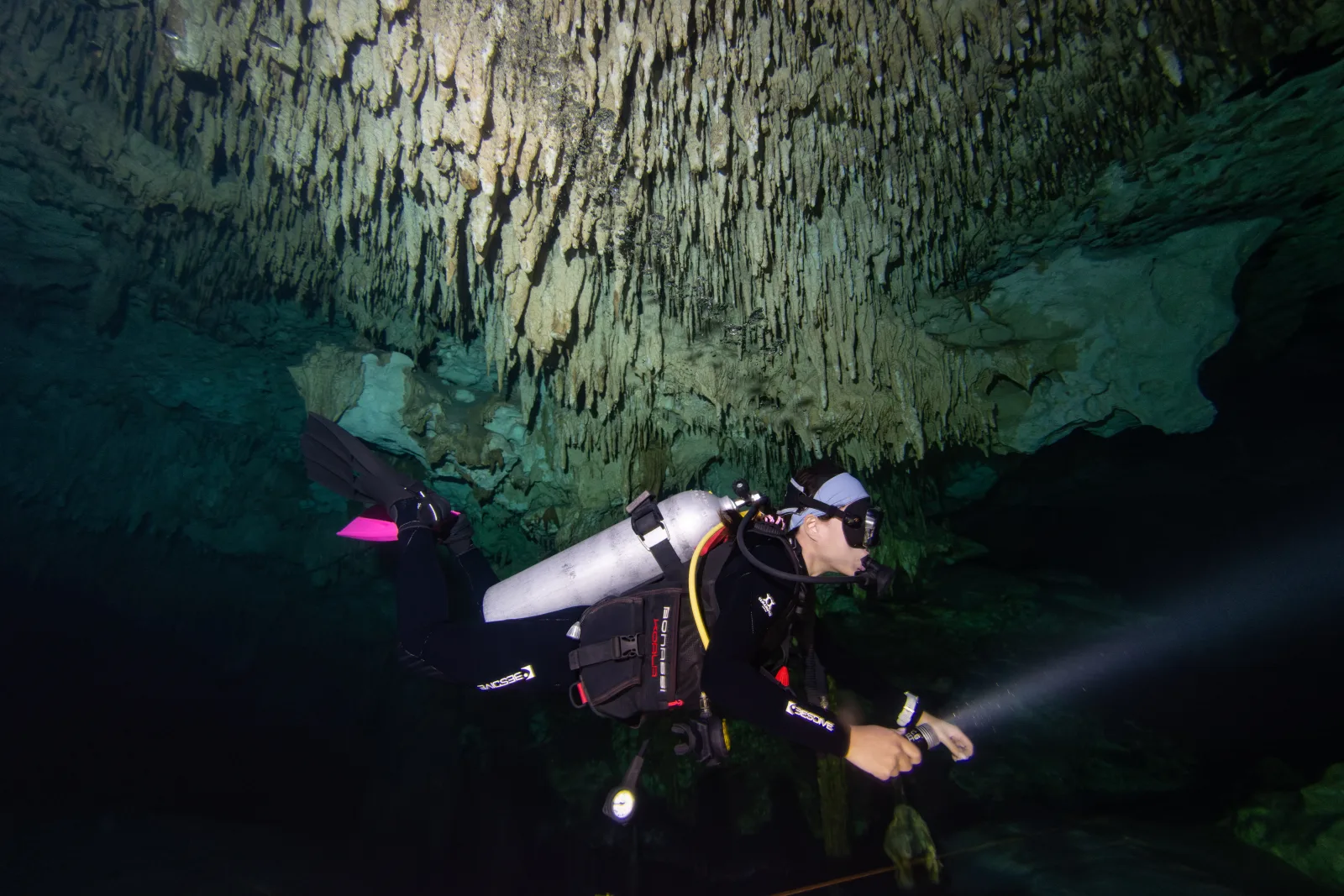
Stalactites, stalagmites and columns appear throughout the shallow route. The experience depends on moving slowly without touching formations, walls or the bottom.
Cenote field guide
Dreamgate’s shallow depth does not make it simple: delicate formations, darkness and close control shape the experience.
At a glance
Confirm before planning: Routes, maximum depth, dive time and ascent procedures are planned rather than guaranteed. The final plan depends on site conditions, certification, recent experience, gas use and guide assessment.
Site notes / 01—03
The character of a cenote comes from its route, light, depth and current conditions. These notes are a starting point for a conversation with Adiel.
Stalactites, stalagmites and columns appear throughout the shallow route. The experience depends on moving slowly without touching formations, walls or the bottom.
The proposed maximum is only seven metres, but darkness, overhead conditions and fragile surroundings can demand more control than a deeper open-water dive.
Adiel will want to understand your recent diving, buoyancy, trim and finning before deciding whether this delicate cavern environment suits you.
Look closely / leave it untouched
Before entering the water
Adiel also asks about recent dives, buoyancy and comfort in the environment.
Read certification and depth guidance →Depth, route and time depend on current conditions, gas use and guide assessment.
Secure equipment and use controlled movement near formations, vegetation and the bottom.
Read the cenote safety guide →Related tour combo
See how this cenote is paired with another environment, then ask Adiel about the current route, requirements, price and availability.
Site-specific questions
Use these answers as a starting point and confirm the current details directly with Adiel.
Depth is only one factor. Precise buoyancy, trim, finning and comfort in a dark overhead environment are central to protecting the site and maintaining control.
Ask Adiel. Certification is only the starting point; recent experience and demonstrated buoyancy, trim and finning also matter here.