Open Water
Some cenotes have large open sections with direct access to open water above.
A local introduction
Beneath the jungle around Tulum is a different underwater world. There is clear water, limestone and natural light, but also silence, calm and the feeling of simply being there.
The environment
Cenotes form where limestone bedrock collapses or erodes, exposing groundwater. Across the Riviera Maya, many cenotes connect to extensive underground water systems. Some are mostly open to the sky, while others lead into cavern environments.
The quiet, stillness and natural light can make a cenote feel very different from an ocean dive.
Cenote diving often features exceptionally clear groundwater, little surface movement and limestone formations. Depending on the site, a dive may remain in an open-water section or follow a planned cavern route within recreational limits.
Some dives are shallow and relaxed; others involve deeper or more demanding profiles.
Know the difference
These terms describe different environments and training limits. Cave diving is a separate discipline and is not the same as a guided recreational cavern dive.
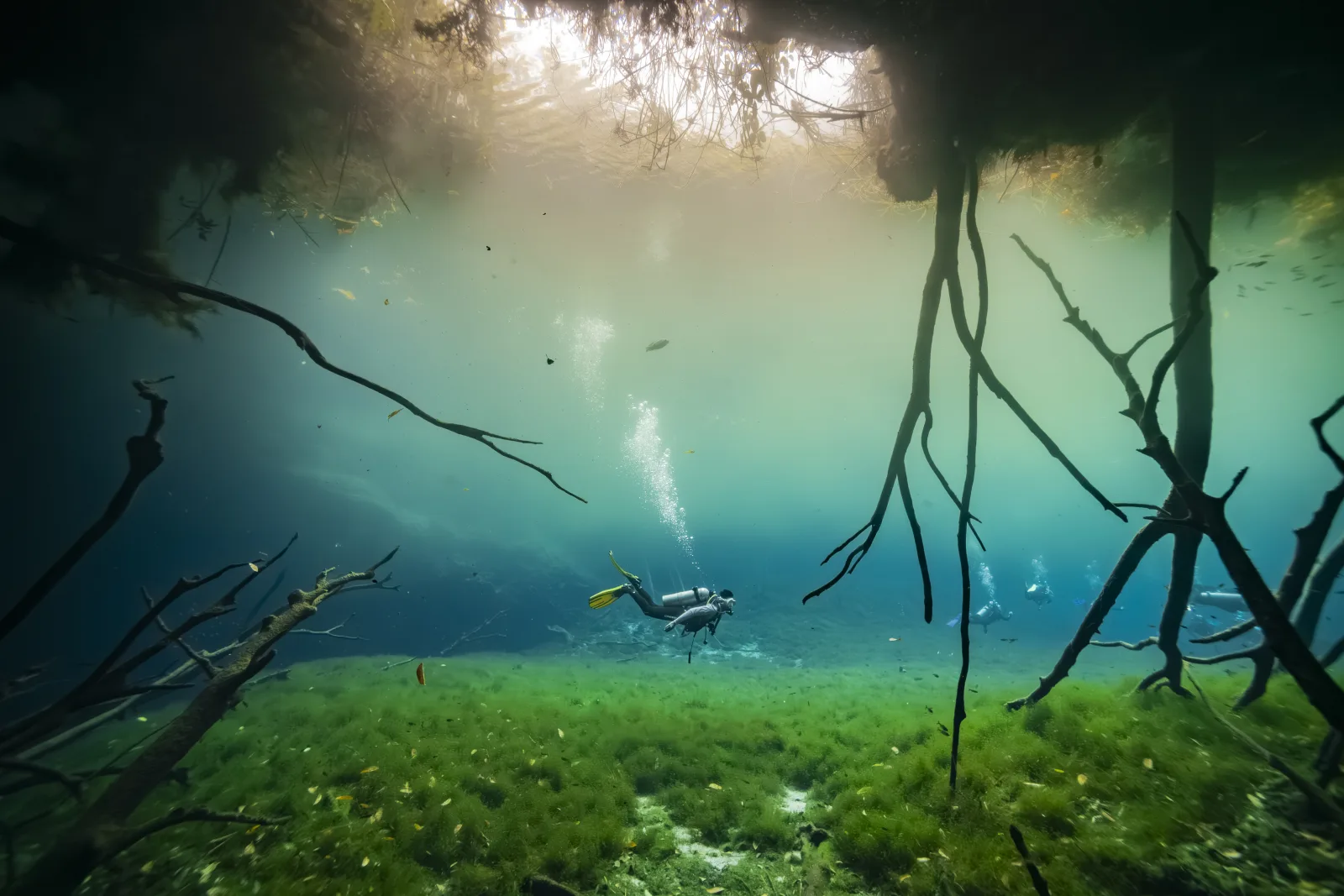
Some cenotes have large open sections with direct access to open water above.
Cavern diving stays within the daylight zone and established recreational limits, with a visible route back to open water.
Cave diving goes beyond recreational cavern limits and requires specialized cave-diver training and equipment.
Training and experience
The certification you need depends on the cenote and the planned dive. Some guided recreational cavern routes may suit Open Water divers, depending on the site, current conditions, recent experience and buoyancy control.
Advanced certification may be required for deeper profiles. Cave routes require specialized cave-diver training.
Depth varies considerably from one site to another. Some dives remain relatively shallow, while others follow deeper profiles.
Depth alone does not determine difficulty. The environment, route, conditions and experience required also matter.
Every cenote is different
The deepest or most famous cenote is not always the best choice. Start with how diving feels, what interests you and what you want from the day.
Confirm that the planned route matches your certification level.
Think about how diving has felt lately, including buoyancy and comfort.
Decide whether you prefer natural light, formations, deeper profiles or cavern passages.
Each cenote has a distinct character, so ask what makes the planned dive different.
Compare the sites
Explore each cenote by environment, planned depth and experience level. From there, open the individual field guide or ask Adiel which setting may suit you.
Explore Cenotes →The day of the dive
Before entering the water, Adiel explains the cenote, planned route and dive profile. The conversation may include recent dives, cavern experience, comfort with darkness and anything you want to ask.
Conditions and access can change, so ask who you’ll dive with, when and where to meet, what is included and what to bring.
View Cenote Dive Tour Combos →Nothing needs to be rushed
A cavern is an overhead environment, so calm preparation matters. The route should remain within each diver’s training, recent experience, comfort and planned limits.
Leave no trace
Think of a cenote as a natural museum: observe, appreciate and enjoy it, but do not touch or take anything. Good buoyancy and careful movement help protect these fragile places.
Common questions
Requirements vary by site and conditions. Confirm the current details for your dive directly with Adiel.
Yes. The certification required depends on the specific cenote and dive profile. Some routes may be suitable for Open Water divers, while others require advanced certification or additional experience.
It depends on the cenote, planned route and conditions. Some are relatively straightforward recreational cavern dives; others involve deeper or more demanding profiles.
Depth varies significantly between sites. Check the specific dive profile and requirements before making plans.
Some guided recreational cavern routes may be suitable, depending on the site, conditions, recent experience and buoyancy control.
Cenotes are groundwater-fed and are generally freshwater near the surface. Water composition can vary by location and depth, especially in coastal systems.
Recreational cavern diving remains within the daylight zone and established limits. Cave diving extends beyond those limits and requires specialized cave-diver training and equipment.
Ask questions, including the small ones. Adiel will explain the environment, rules and planned route, then suggest a dive that suits your training, recent experience and comfort.
Have questions?
The right option depends on your certification, recent diving, comfort and current conditions. Explore the tour combos or ask Adiel about a cenote.